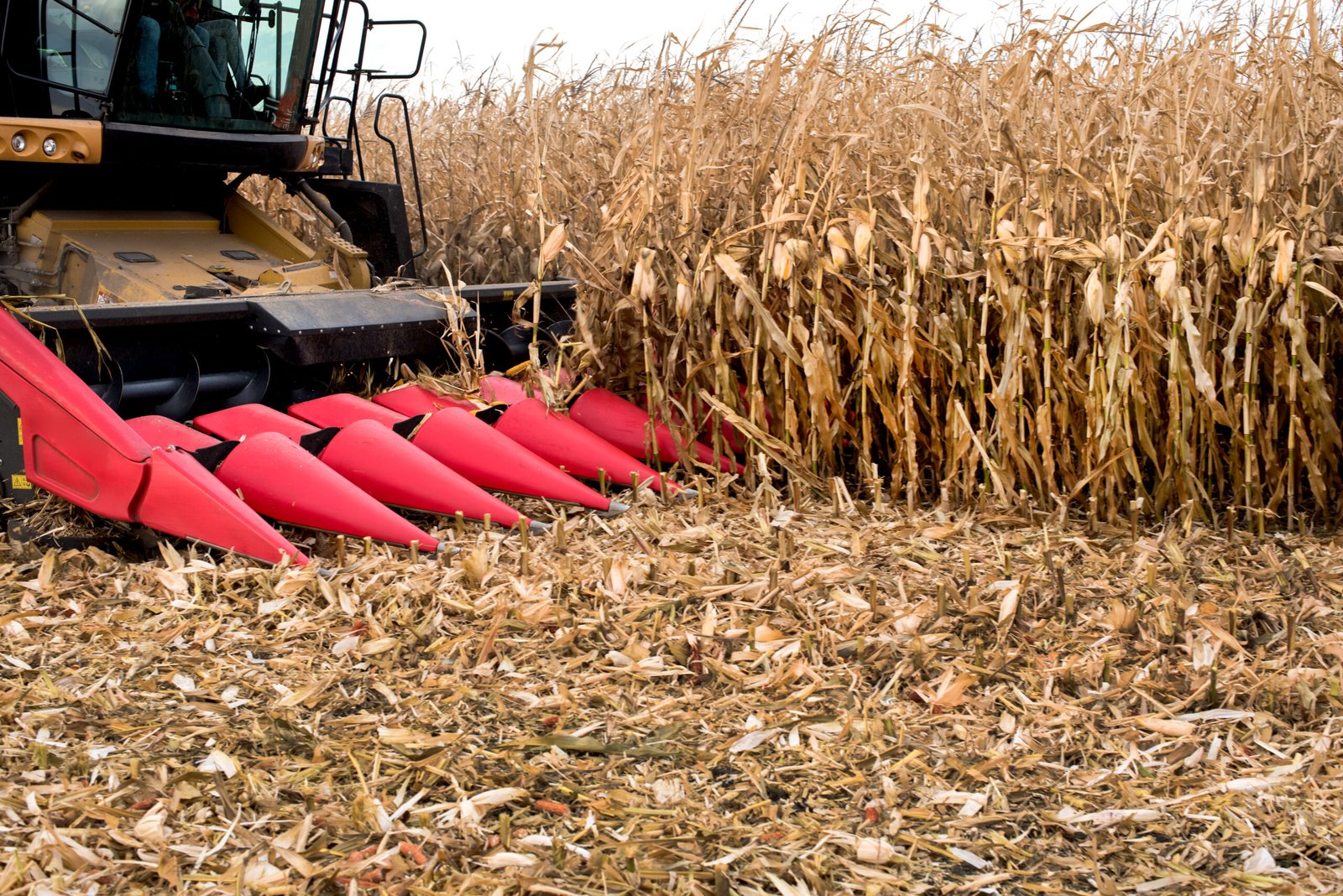
Most grain loss during harvest doesn’t happen at the threshing unit, where almost everyone looks. It starts earlier, at the cutting header, at the machine’s first contact with the plant. It’s a silent loss: no one sees it in the truck, because the grain never made it there. It stays on the ground, between the crop and the cutting bar, and disappears in the harvester’s wake. This blog exists to talk about it, with the seriousness the problem deserves.
The reason this loss goes unnoticed is simple. It doesn’t show up on the cab monitor, doesn’t jam the machine, makes no noise. A variation of just a few centimeters in cutting height, repeated across hundreds of hectares, leaves behind low-hanging corn ears close to the ground. Each centimeter of error, multiplied by the farm’s area, becomes a bag of grain. And a bag is revenue that never reaches the truck. The first step to reducing this loss is understanding where it starts — and that’s what we’re going to write about here.
HarvLabs is a Brazilian embedded electronics company for harvesters, born at Biopark de Toledo, in western Paraná. Our work is focused on one thing: automatic corn header control. Height, float and lateral tilt, adjusted in fractions of a second, so the machine follows the ground without relying on constant manual correction from the operator. It’s not just another cab accessory. It’s the link between uneven terrain and the hydraulic system — what decides whether the cut comes out clean or leaves grain behind at every meter.
We chose Biopark as our home base for a practical reason: innovation in agriculture is built close to labs, universities and fields, not in isolation. This is engineering designed for the reality of Brazilian farmland — soil that changes texture mid-field, tight harvest windows, machines that can’t afford to stop. Every design decision goes through one question: will this hold up through an entire season of dust, heat and vibration without failing when the farmer needs it most? Before reaching the field, every version of the system goes through stress testing on the bench, because failing in the lab is always better than failing in the customer’s field. And it’s engineering with the ambition to run on any harvester, anywhere in the world. The Engineered in Brazil stamp is the promise of solving a global problem with a national solution.
Here you’ll find technical content translated into cab language, because the person making decisions during harvest isn’t an engineer — it’s the person doing the harvesting. Over the coming articles, we’ll break down:
- The physics of loss: why grain is lost at the header, and how to measure it in your own field with a tray and ten meters of crop row.
- Automatic height control: what changes inside the cab when the machine starts reading the ground on its own, and in which scenarios the investment pays off.
- The sensors behind the system: why a contactless reading survives dust, vibration and heat across an entire season better than alternatives.
- Practical application: in corn harvesting, how to set up the machine for each terrain type, and how to know if the technology works with your harvester.
- Agriculture and the market: harvest season, second crop, trends and Brazil’s place on the global harvesting map.
Every technical claim we make here will come with field context. And as our pilots progress, this blog will bring documented results: real data, measured in the field, with a method the farmer can replicate. We’d rather show the challenges of harvesting honestly than show proven results, because in agriculture it’s field proof that decides — and trust is built one season at a time.
The whole blog revolves around one simple idea: the grain that doesn’t get lost. It’s the thread connecting every article, from the problem to the solution, from the misaligned centimeter at the cutting bar to the extra bag in the truck. And we’ll start at the beginning — the physics of grain loss at the cutting header. Stay with us. The harvest has more grain to give back than it seems.
Talk to HarvLabs → https://harvlabs.com/en/contact